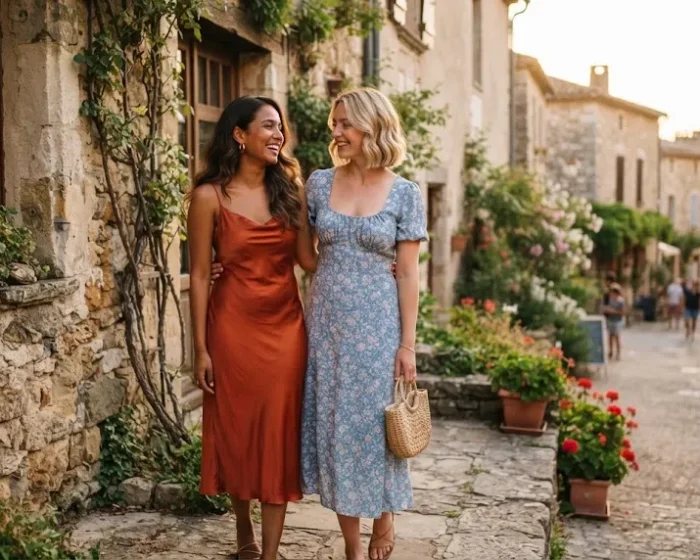
Finding wedding guest outfits for petite women can feel like a guessing game.
Most dresses fit long, not short. You order two sizes just to be safe.
This list skips the guesswork. Every pick solves a real fit problem, so you know exactly what works before you buy.
1. The Petite Sizing Rule That Fixes Everything
One rule solves more fit problems than any single dress style.
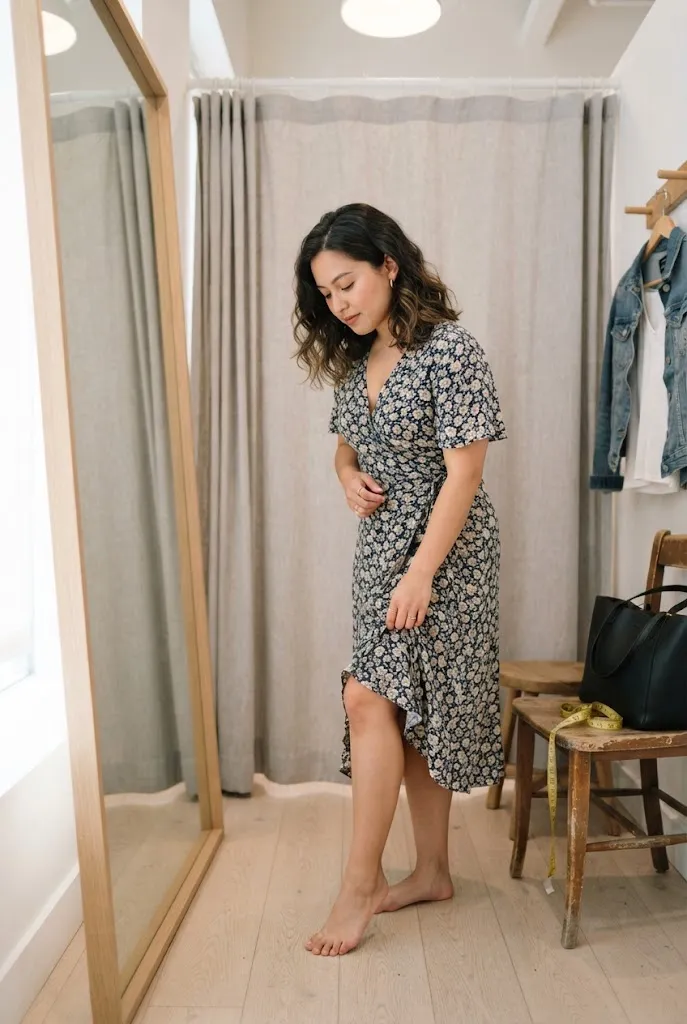
Match the hem to your natural break point, not the size chart’s.
A dress meant to hit mid-calf on a 5’8″ model can land at your ankle. That shifts the whole proportion of the outfit.
Petite lines exist for this exact reason.
Brands like Reformation, Nordstrom, and ASOS Petite cut the torso and hemline shorter, so the waist sits where your waist actually is.
Before buying, check the model’s height against the garment’s listed length.
Fit the waistline first. Everything else can be tailored.
2. Lace-Hem Minis Look Formal, Not Short
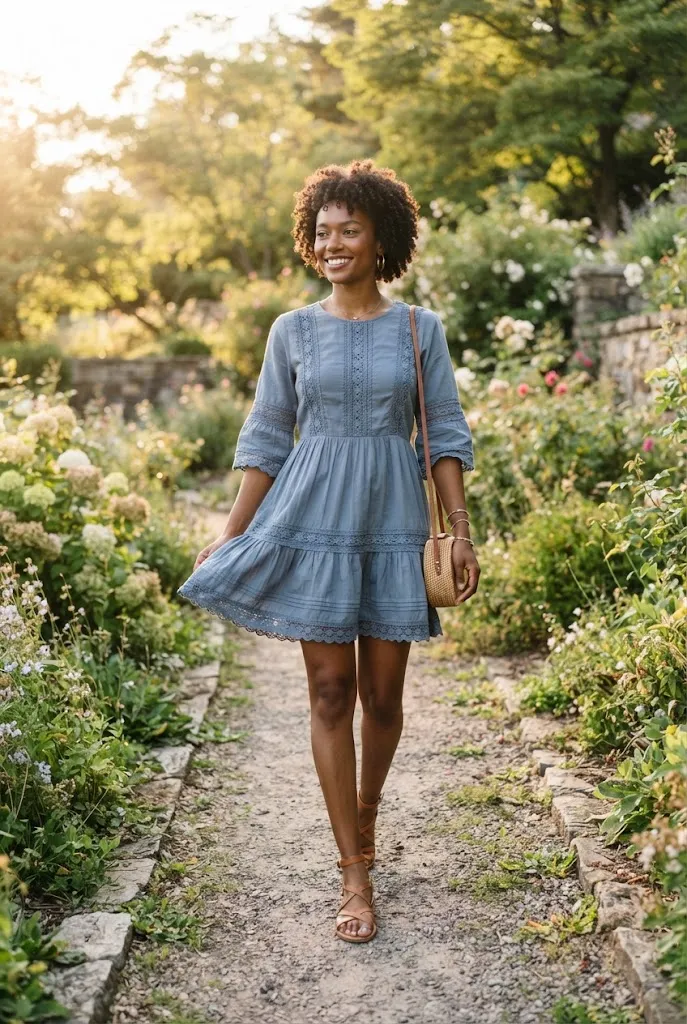
A soft blue mini with a lace hem reads as elegant, not casual.
The eyelash lace fades out instead of stopping in a hard line.
That gradual edge tricks the eye into seeing more coverage than there actually is.
Pair it with heels in a matching tone.
The bare leg between hem and heel should look intentional, not like the dress ran out of fabric.
This works especially well for petite frames, since a clean mini avoids the mid-calf zone that often looks awkward.💡 Quick Tip
Pick lace with a soft, uneven edge, not a straight cut line.
3. Cowl Necks Do the Shaping For You

A cowl neckline drapes fabric in soft folds instead of sitting flat against the chest.
Those folds catch light and shadow, which naturally narrows a smaller frame.
You don’t need a fitted bodice for this to work.
The drape itself creates the shape, so the dress does the styling for you.
Satin and silky fabrics show the cowl best.
Stiffer materials won’t fold the same way, so check the fabric content before ordering online.4. Cape Sleeves Add Height, Not Bulk
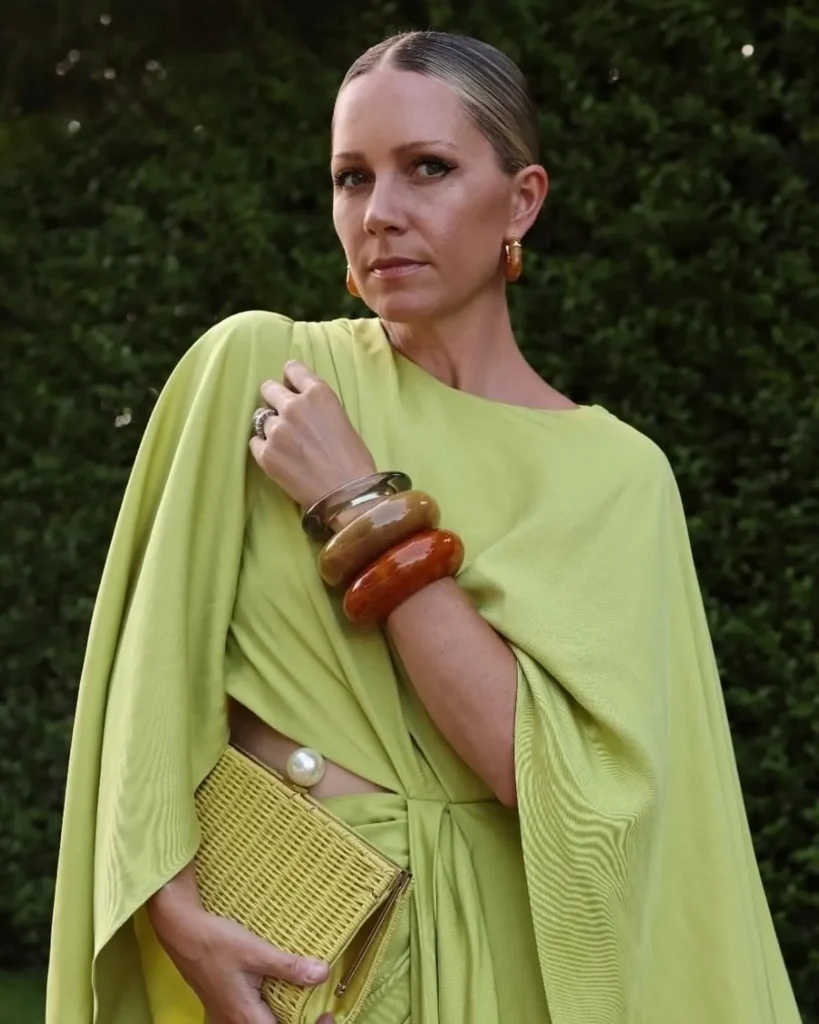
Most people assume extra fabric on a sleeve will overwhelm a petite frame.
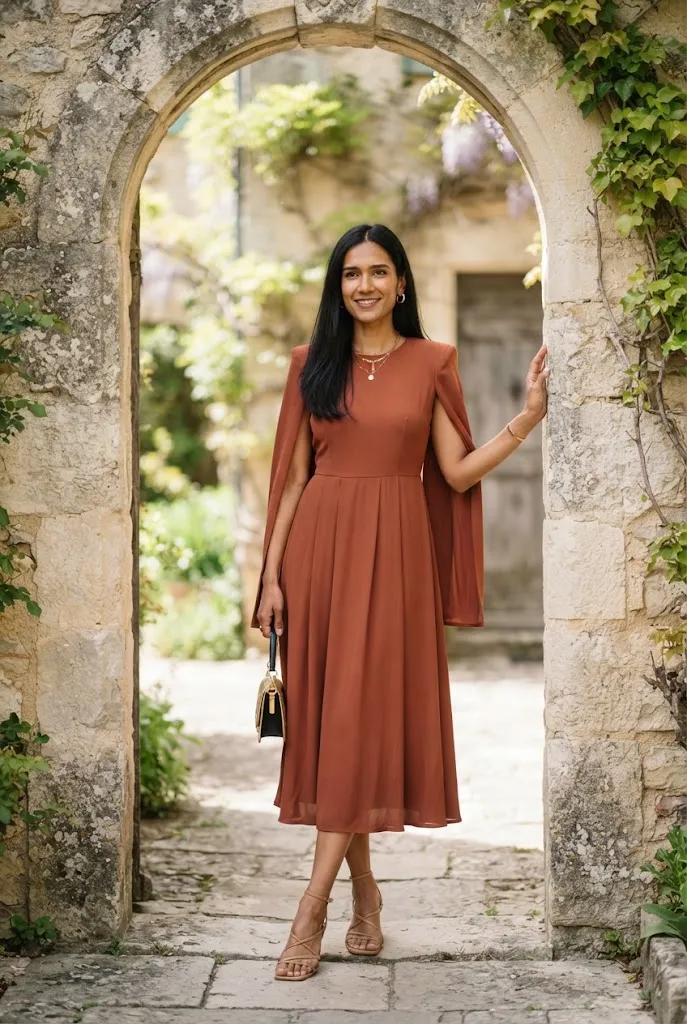
A cape sleeve does the opposite when it’s cut right.
The vertical drape draws the eye downward, which stretches the whole silhouette.
Here’s why it works:
The cape falls from the shoulder, so it doesn’t add width at the widest point.
Choose a cape that ends around elbow length. Longer capes can swallow a smaller frame.Pick a cape that stops at the elbow.
Check the base dress fits close to the body.
Add a heel to keep the vertical line going.
Standing beside the bridal party calls a slightly different silhouette rule.
This list of wedding outfits for bridesmaid breaks down which shapes work best on their own.
5. Match Your Shoes to Your Hem
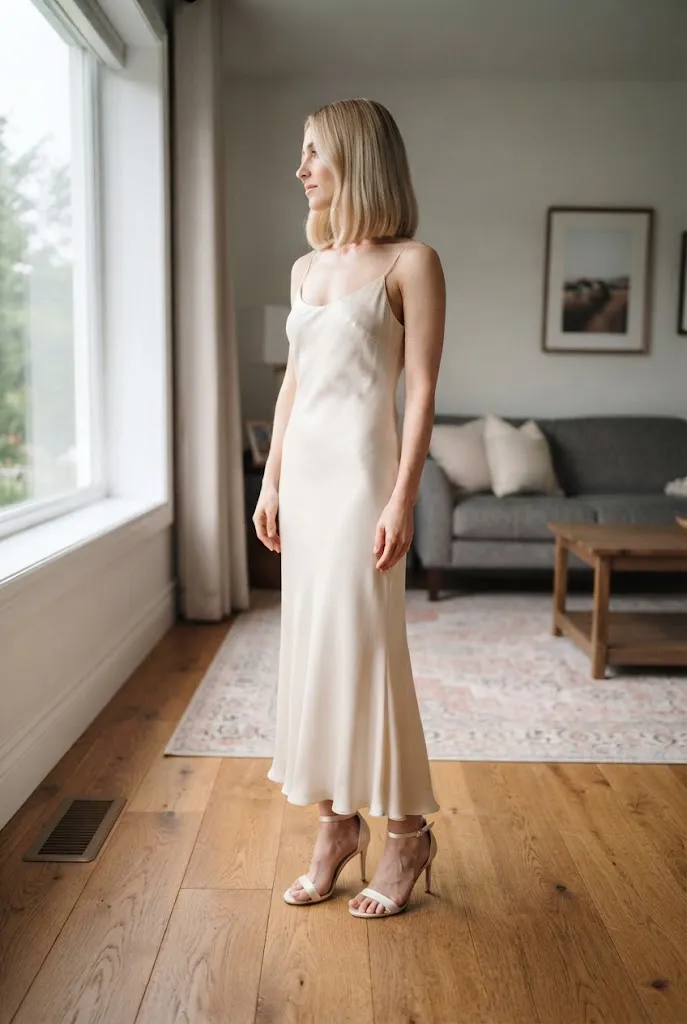
A short frame gets visually cut off whenever there’s a hard color break at the ankle.
Dark dress, light shoe. Light dress, dark shoe. Either one shortens the leg line.
The fix is simple.
Choose a shoe close to your skin tone or close to the dress color.
Strappy sandals in nude, gold, or silver blend into most hem colors.
That blend removes the visual stopping point and reads as one continuous line from hem to floor.Dark hem, bright white sandal, visible break at the ankle.
Nude strappy heel blends into the hem, leg line looks longer.
6. The Strapless Fit Check
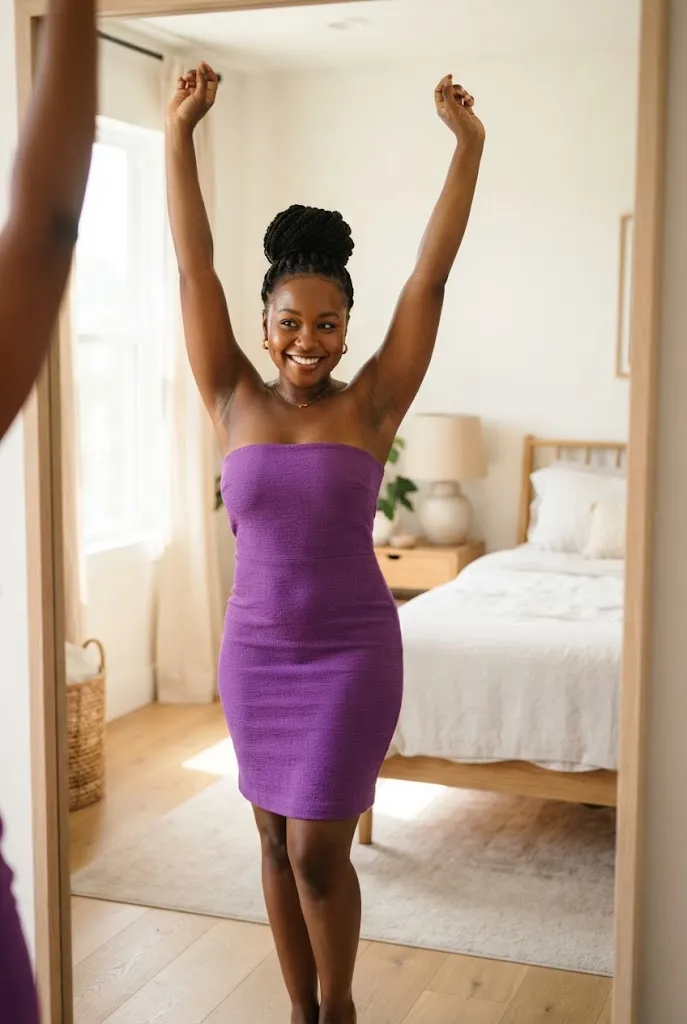
A strapless dress that slips down every ten minutes ruins the whole night.
The fix happens before you buy, not after.
Try the dress on and raise both arms overhead. If the bodice shifts or gaps, size down or skip it.
A boned bodice, like the sequin strapless shown above, holds its shape without you thinking about it.
Soft jersey strapless dresses rarely offer that same support.⚠️ Watch Out
Skip strapless dresses without internal boning or a grip band.
7. High Neck vs Low Neck
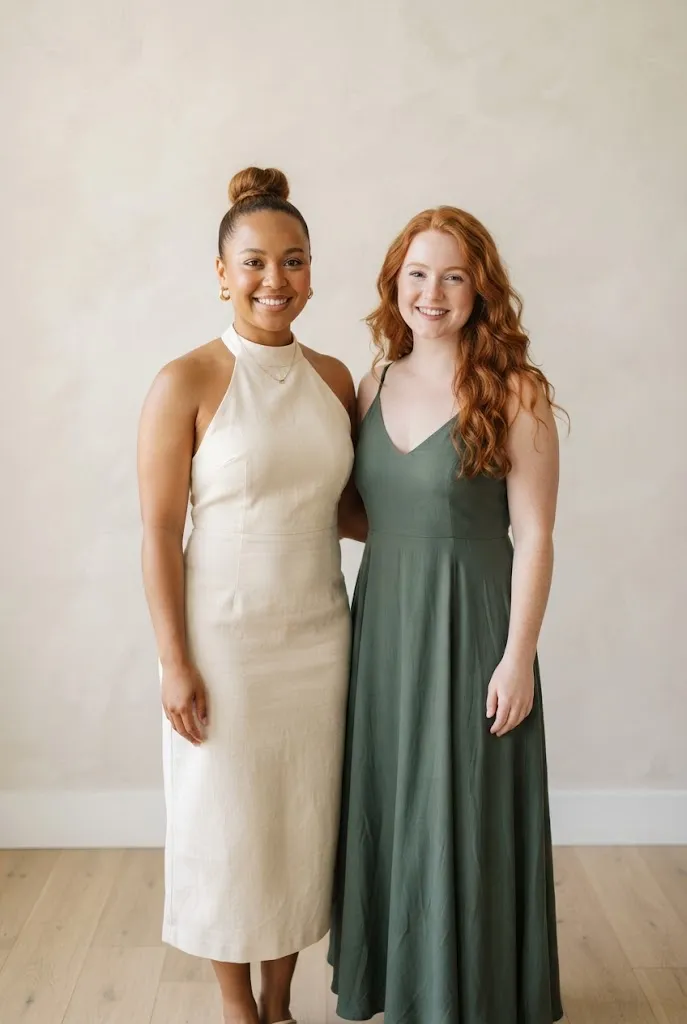
Petite frames can wear both necklines. The trick is what they’re paired with.
A high neckline, like a mock neck or halter, works best with an open back or cutout.
That balances coverage up top with skin showing elsewhere.
A low or off-shoulder neckline works better with fuller coverage below, like a fitted midi skirt.
The goal is to avoid coverage stacking on coverage, which can shorten the frame.Pair high neck with an open back.
Pair low neck with a fitted skirt.
High neck plus long sleeves plus long skirt.
Too much coverage stacked at once.
8. A Fitted Waist Always Wins
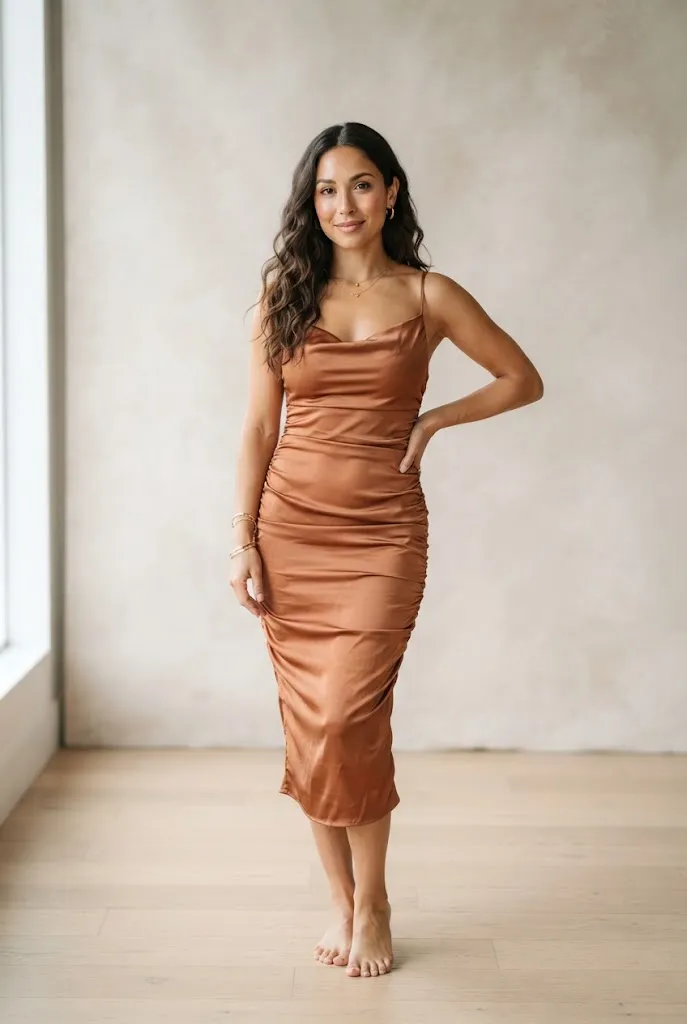
An empire waist sounds flattering, but it often hides where your natural waist actually sits.
On a petite frame, that raised seam can shorten the torso.
A fitted, natural waist does the opposite.
It marks the smallest point on your body, which then makes the legs look longer by contrast.
Ruched satin dresses, like the copper one above, gather fabric right at the natural waistline.
That ruching adds shape without needing a separate belt.| Empire Waist | Natural Waist |
|---|---|
| Sits high, shortens torso. | Sits at true waist, lengthens legs. |
| Can look maternity-style. | Reads structured and formal. |
9. Vertical Prints Beat Horizontal
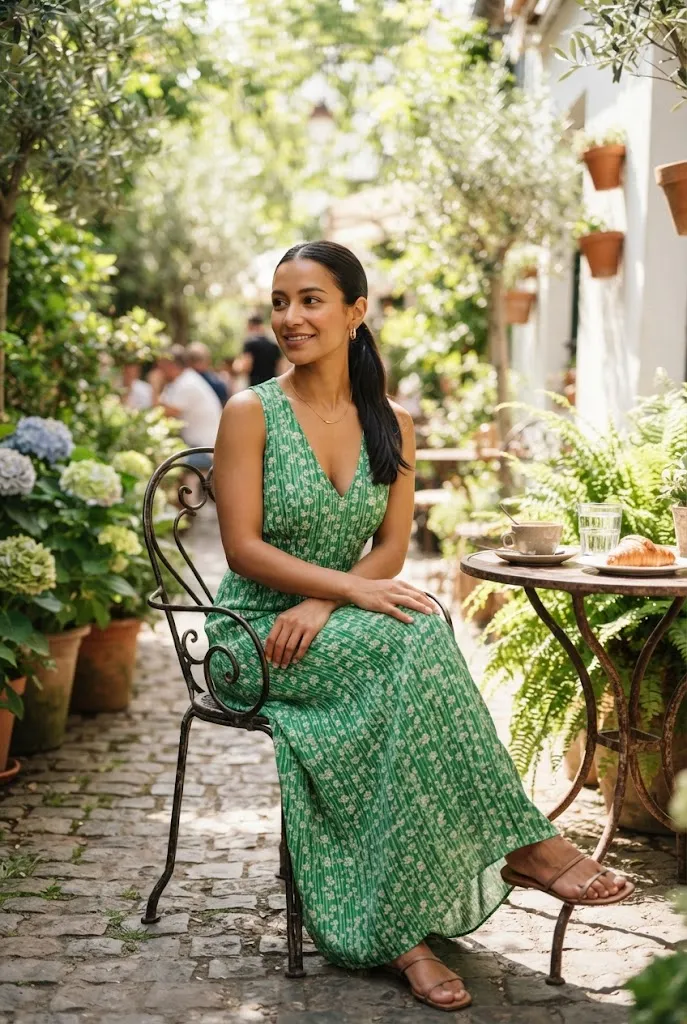
Florals and prints can work beautifully on a petite frame, but direction matters.
A vertical or diagonal print pulls the eye up and down.
A horizontal print, or a large all-over pattern with no clear direction, can flatten the frame instead.
The green floral dress above uses a vertical brushstroke pattern that follows the body’s natural line.10. Skip Platforms, Choose Ankle Straps
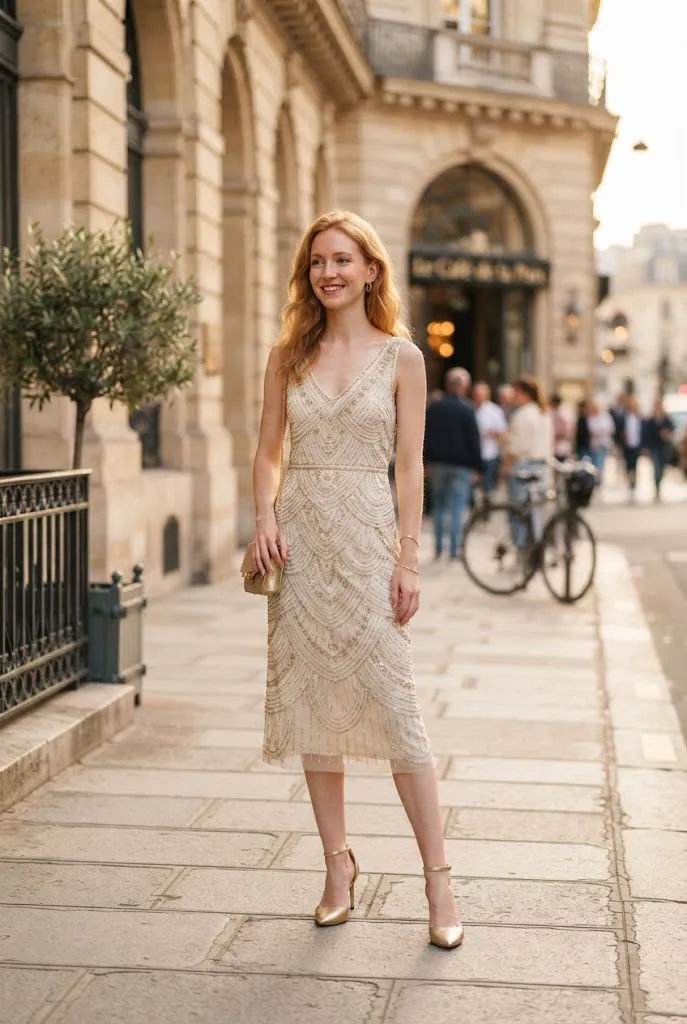
A platform sole adds height, but it also adds visual bulk at the foot.
That bulk can work against a smaller frame instead of for it.
Ankle straps wrap the foot in a way that keeps the leg line reading as one long shape, not broken into separate parts.Shoe checklist
11. The One Slip Dress Fix
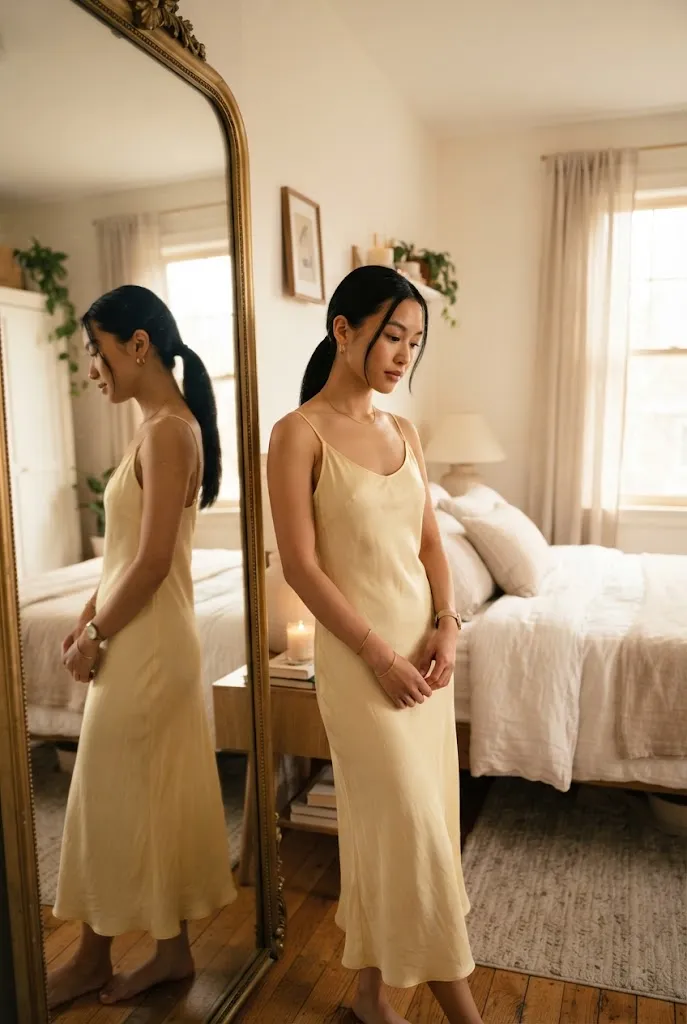
A silk slip dress looks effortless, but on a petite frame it can pool at the floor.
That excess length reads as sloppy instead of relaxed.
The fix is a single tailoring appointment.
Have the hem taken up to just above the ankle bone.
A bias-cut slip, like the pale yellow one above, drapes close to the body once it’s shortened correctly.
Skip iron-on hem tape. Bias-cut fabric needs a real hem to hang straight.Slip pools on the floor, bunches when you walk.
Hem sits above the ankle, fabric skims the body.
12. Waist Cutouts Create Instant Shape
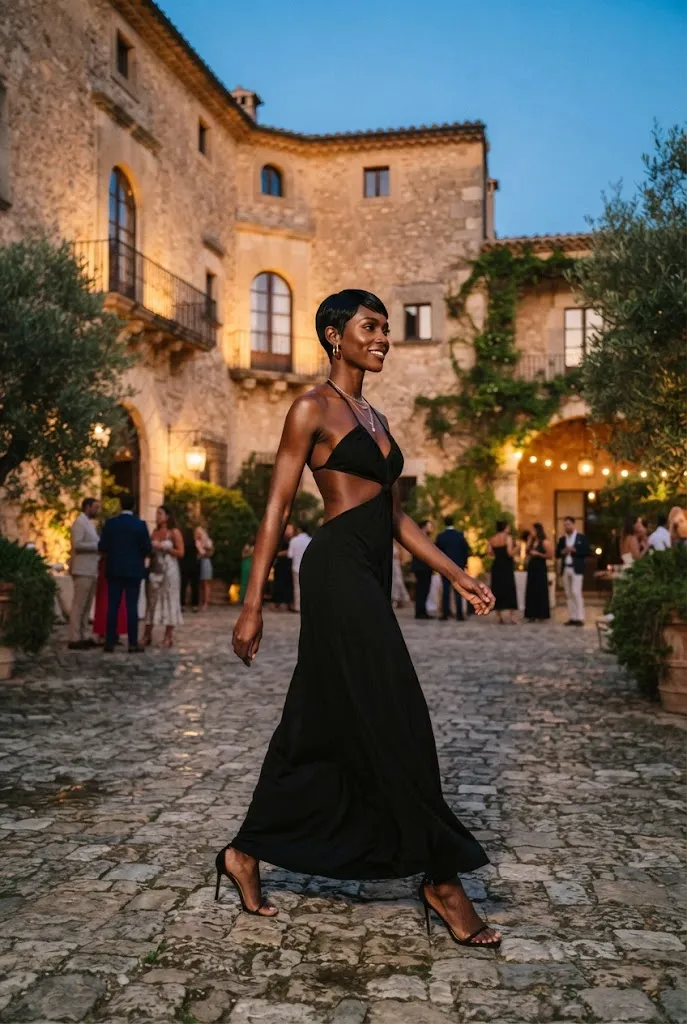
Cutouts sound bold, but placed right, they’re one of the easiest shaping tricks around.
A cutout at the natural waist does the same job as a belt.
It marks the smallest point on the body without adding any extra fabric.
The black halter dress above uses this exact placement.
The cutout sits low enough to define the waist, but high enough to stay wedding appropriate.📌 Good To Know
A cutout at the waist reads as tailored, not just trendy.
13. Off-Shoulder Draws the Eye Up
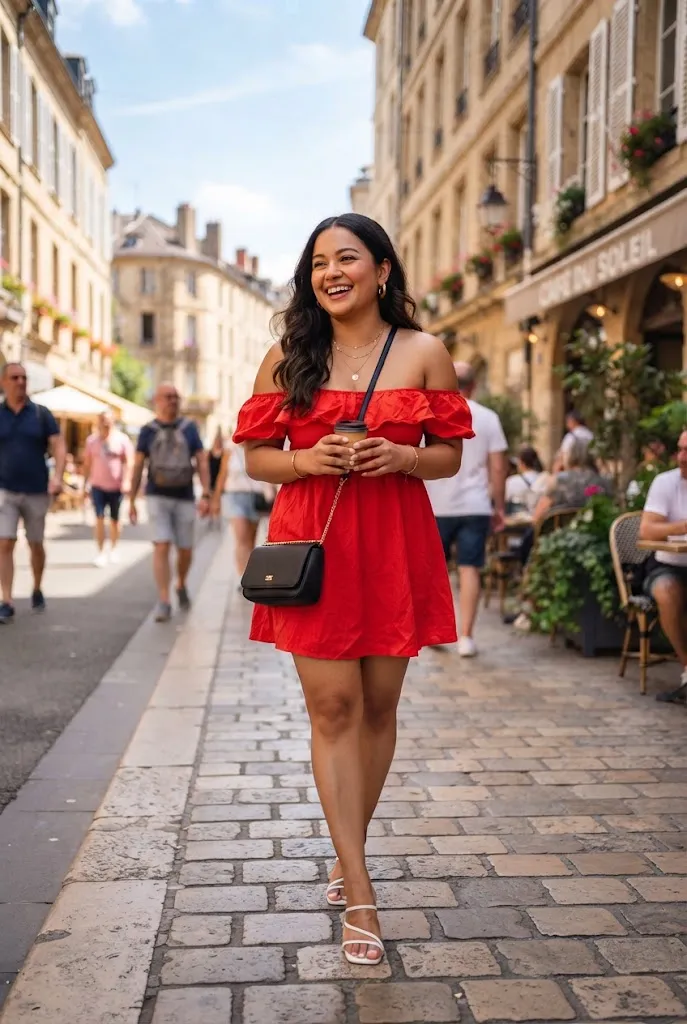
An off-shoulder neckline exposes the collarbone, which is the widest point on the upper body.
That width, placed high, pulls attention upward instead of sideways.
The red off-shoulder dress above uses a straight-across neckline for this exact reason.
It’s a small shift with a big visual effect on a smaller frame.
Choose a fitted bodice underneath. A loose off-shoulder top can slide down and lose the shape.14. The Midi Sweet Spot
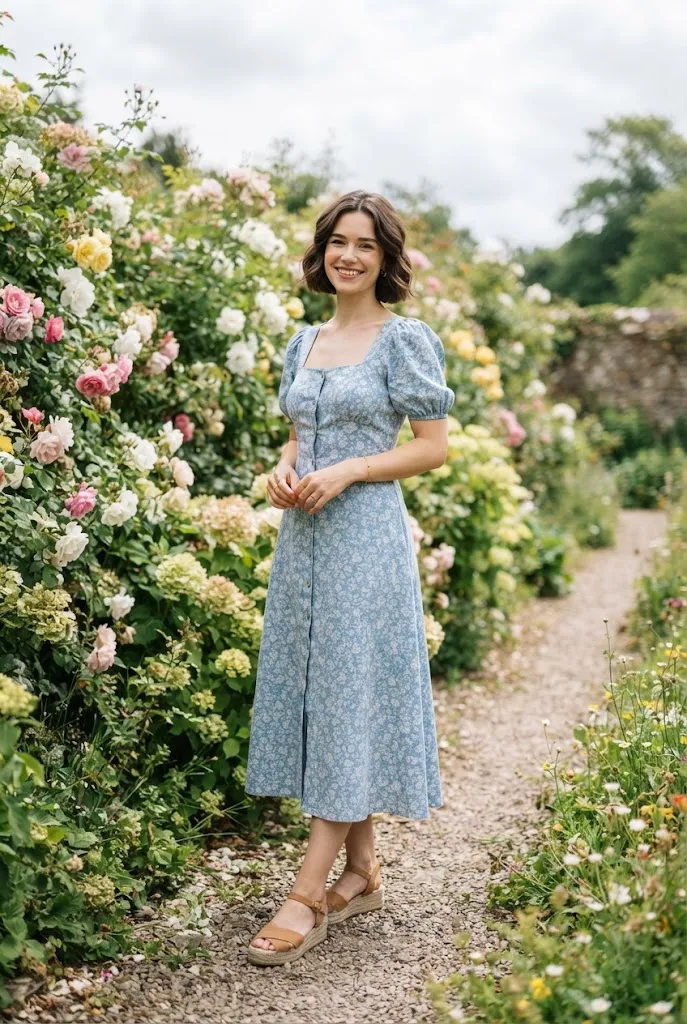
Midi length has a reputation for being risky on petite frames, but the length itself isn’t the problem.
The exact stopping point is.
Anywhere between mid-calf and the widest part of the calf tends to cut the leg line short.
A hem just below the knee, or one that drops to the ankle, avoids that zone entirely.| Risky Length | Safer Length |
|---|---|
| Mid-calf, cuts leg short. | Below knee, keeps leg long. |
| Widest calf point. | Ankle length, full and clean. |
15. When Puff Sleeves Overwhelm
Puff sleeves feel romantic, but oversized ones can swallow a smaller frame fast.
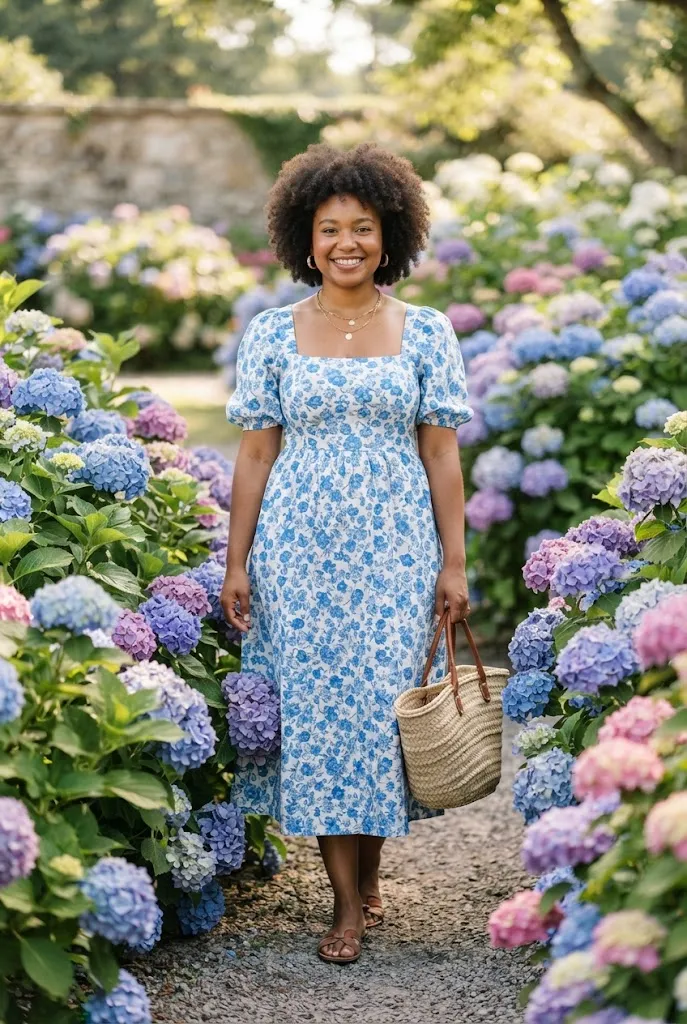
The blue floral dress above works because the puff is moderate, not exaggerated.
A small frame needs volume that stays close to the shoulder.
A sleeve wider than your shoulder line will throw off the whole outfit.Choose a moderate, close puff.
Pair with a fitted bodice.
Oversized sleeves past shoulder width.
Loose bodice paired with big sleeves.
16. Tailoring Beats Sizing Down
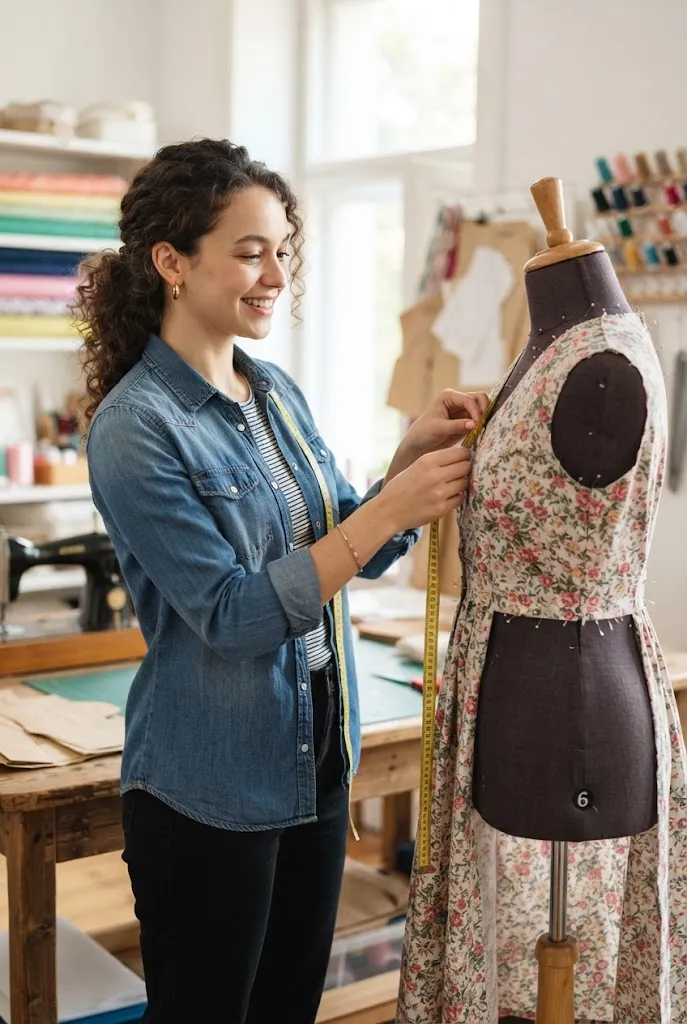
Buying a smaller size to avoid excess fabric almost always backfires.
Shoulders pinch, zippers strain, and the dress stops looking intentional.
A tailor can take in a properly sized dress far more easily than they can let one out.
Budget ten to fifteen dollars for a basic hem, more for waist or shoulder adjustments.
This one habit fixes more outfits than any single dress choice on this list.Buy for your shoulders and bust, then let a tailor handle the rest.
Wrapping Up
None of this requires a whole new wardrobe.
Wedding guest outfits for petite women come down to a handful of repeatable choices.
Fitted waists over loose ones. Matching shoe tone to hem tone. Necklines that pull the eye up instead of out.
A good tailor fixes more than a smaller size ever will.
Pick two or three ideas from this list, try them with pieces you already own, and build from there.
Recent Posts
-
 13 Errand Running Outfit for women over 40 featuring Easy Sneakers
-
 13 Aesthetic Wedding Guest Outfits for Plus Size Women
-
 12 Masquerade Party Outfit for Ladies That Balance Mystery and Glamour
-
 14 Masquerade Party Outfit Ideas for Couples That Turn Heads
-
 11 Winter Travel Outfit for Women over 30 for Chic Cold-Weather Trips