
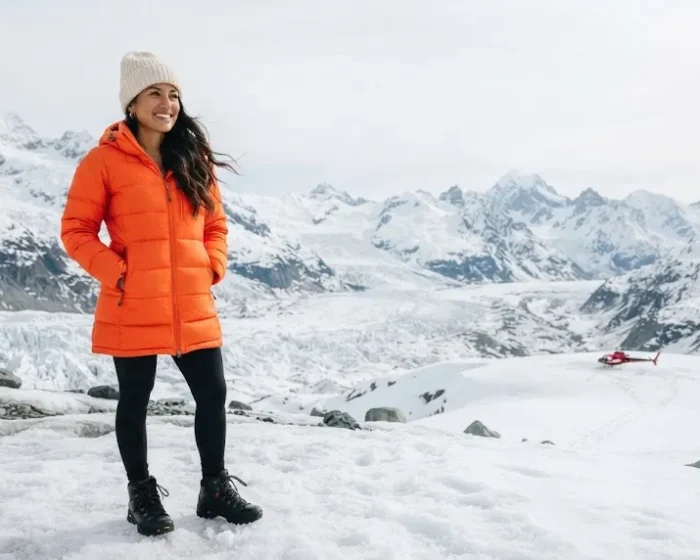
Alaska packing lists online tell you to bring seven sweaters and three coats, and most travelers end up dragging a suitcase they can barely close.
A travel capsule wardrobe for Alaska works differently.
You pick fewer pieces that actually layer together, so you stay warm on a glacier hike in the morning and still look pulled together at dinner that same night.
The temperature swings are the real challenge.
Mornings on deck can hit the low 40s with wind coming off the water, then you step inside for lunch and it’s warm enough to strip down to a sweater.
A smart capsule handles both without you needing five separate outfits.
Below are twenty specific pieces and combinations, not just a vague list of “layers.”
Each one solves a real problem, whether that’s what to wear on a helicopter landing pad, how to avoid packing three pairs of boots, or which coat color photographs well against every gray sky Alaska will throw at you.
1. One Puffer, Every Outfit
Packing five different coats for one week in Alaska is the most common mistake first time visitors make, and it’s the fastest way to end up with a suitcase that won’t zip.
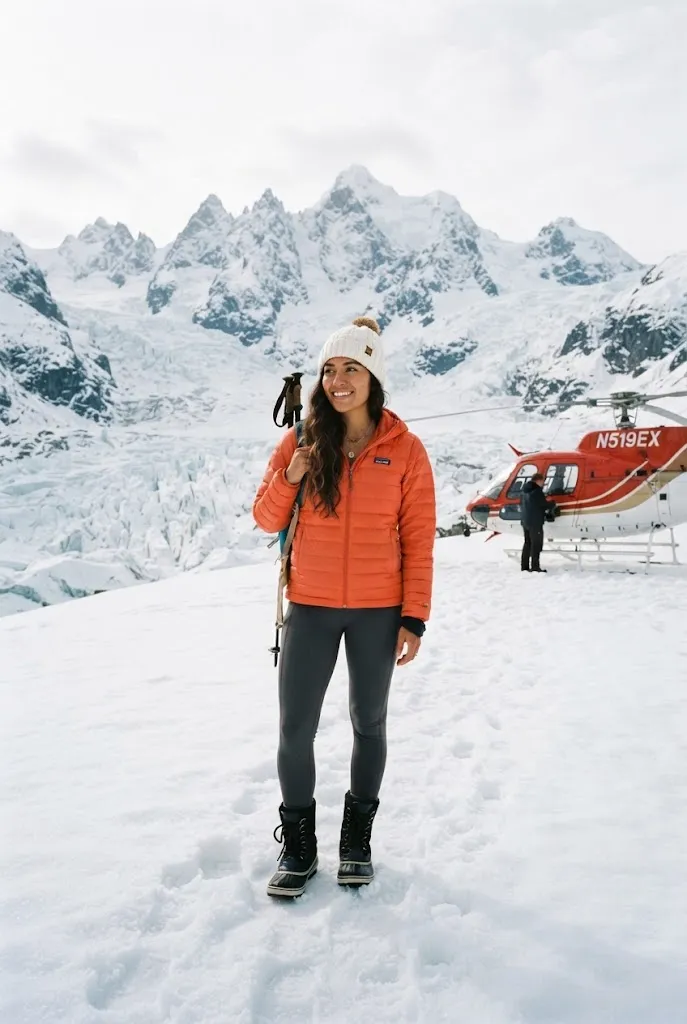
This is really the core idea behind any good travel capsule wardrobe ideas for women capsule wardrobe fewer pieces, more combinations.
What matters is fit. Size it to go over a sweater, not just a t-shirt, or you’ll be stuck choosing between warm and roomy.
- Bright orange or yellow for photos against snow and glaciers
- Knee length for wind on the ship deck
- Hip length and cropped for hiking and mobility
2. The 3-Layer Formula

Layer three pieces the right way and you’re covered from the ship rail to a windy glacier trail without adding a single extra item to your bag. It’s not about how many pieces you bring, it’s about how they stack.
The order matters more than the pieces themselves.
A fitted long sleeve base layer, thin enough to disappear under everything else.
A cable knit or cozy sweater for warmth and texture, worn loose enough to layer under a coat.
A wind blocking puffer or shell on top, sized to fit over both layers with room to move.
3. Leggings or Jeans?
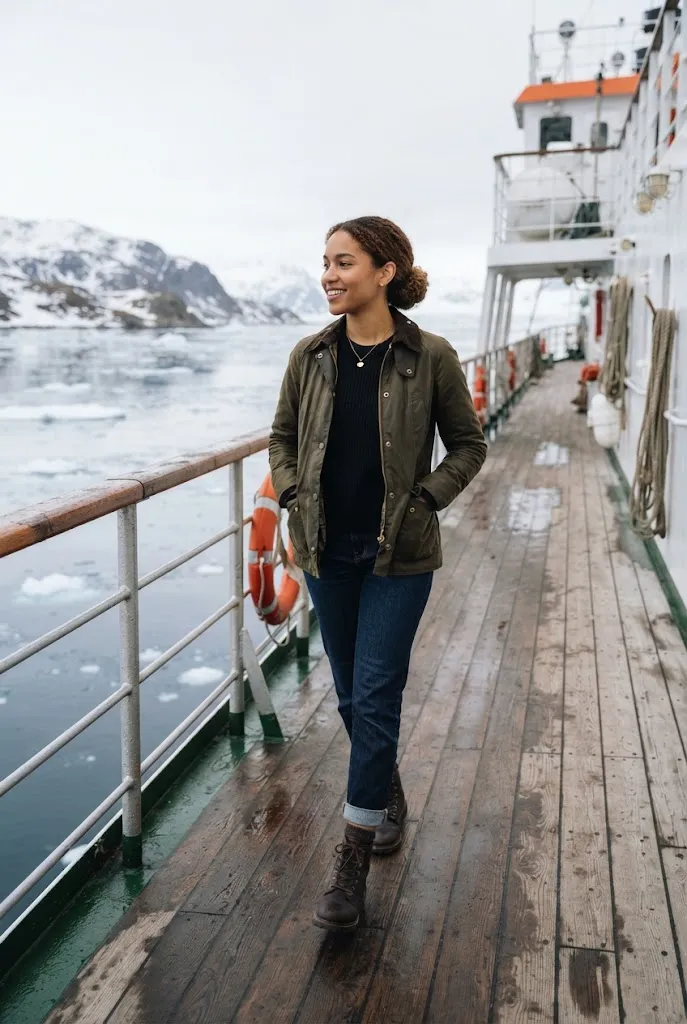
Both work in Alaska, but they solve different problems. Jeans hold up better against wind and look more put together for dinner, while leggings move with you on a hike and layer easier under snow pants.
The honest answer: pack one of each and let the day decide.
4. One Sweater, Five Looks

A cream cable knit sweater is the hardest working piece in a travel capsule wardrobe for Alaska. It reads polished on its own, warm under a coat, and casual with joggers on a travel day.
Quick tip: choose a neutral color so it never clashes with whatever coat you grab that morning.
💡 Quick Tip
Stick to cream, oatmeal, or grey. Those three shades match every coat color in this list without you thinking twice.
5. Vest Over Sweater on Deck
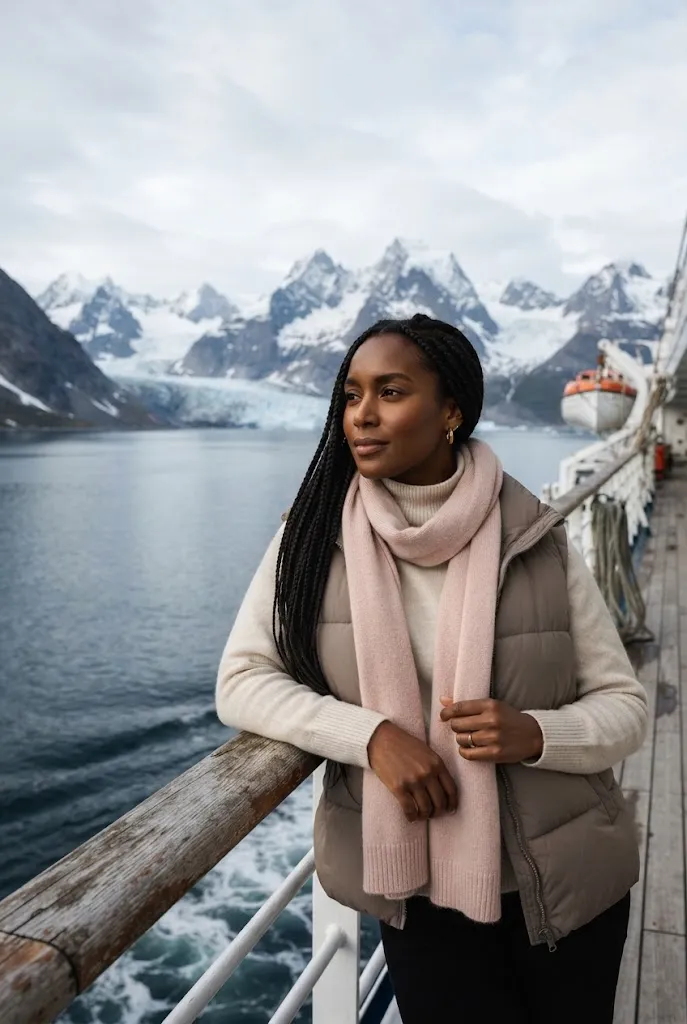
Standing at the ship rail with a fjord full of icebergs in front of you, a full coat can feel like too much once you’re out of the wind. A puffer vest over a chunky sweater keeps your core warm while your arms stay free for photos.
It also solves the layering math for warmer afternoons, when a full coat runs hot but a bare sweater runs cold.
Warm but bulky, arms feel stiff when you’re holding a camera at the rail.
Warm core, free arms, easy to unzip once you step inside for coffee.
6. Snow Boots vs Tall Boots

People assume you need heavy snow boots for Alaska, but that’s only half true. Snow boots win on glacier landings and slushy ground, while tall waterproof boots look better on the ship and still handle wet docks just fine.
The mistake is packing only one type and hoping it covers everything.
| Snow Boots | Tall Boots |
|---|---|
| Best for glacier walks and deep snow | Best for the ship deck and town |
| Bulkier to pack | Packs flatter in a suitcase |
| Warmer in wet, icy conditions | Looks better with jeans at dinner |
7. The Scarf Layer Trick
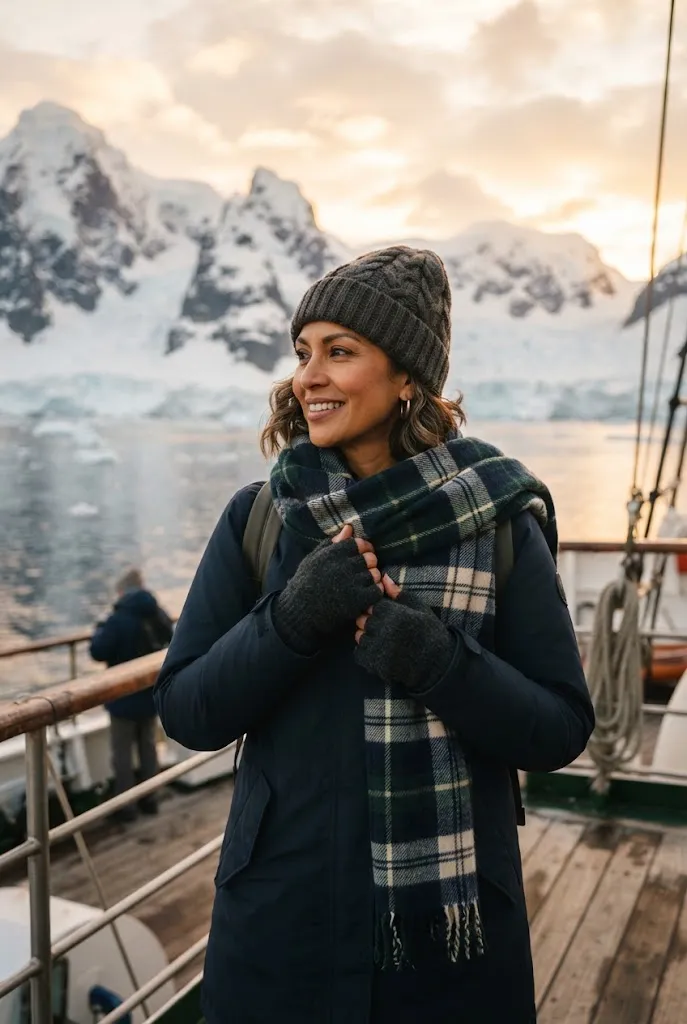
Wrap a plaid or chunky knit scarf over a parka hood and you’ve solved two problems at once: wind hitting your neck and a coat that otherwise looks plain in every photo. It sits over the collar, not tucked in, so it stays loose enough to pull up when the wind picks up on deck.
Skip thin fashion scarves here. They look nice but do almost nothing against real wind.
Choose a thick wool or acrylic knit scarf.
Wrap it twice so it covers your neck fully.
Thin silky scarves that block zero wind.
Anything too long to tuck away on a hike.
8. Beanie + Sunglasses Combo
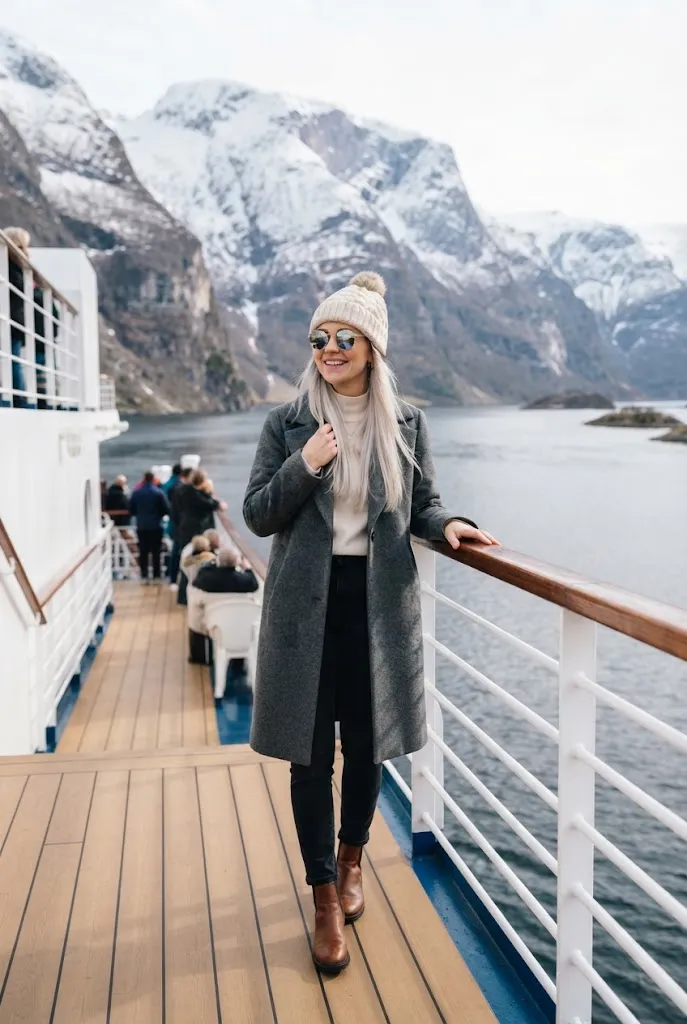
Most heat leaves through your head before anywhere else, so a beanie earns its spot even in a minimal capsule. Pair it with sunglasses and you’ve got a combo that works for glacier glare, ship deck wind, and every group photo in between.
Bring these two before you bring a third sweater.
What to grab first
9. Pick One Bold Coat Color
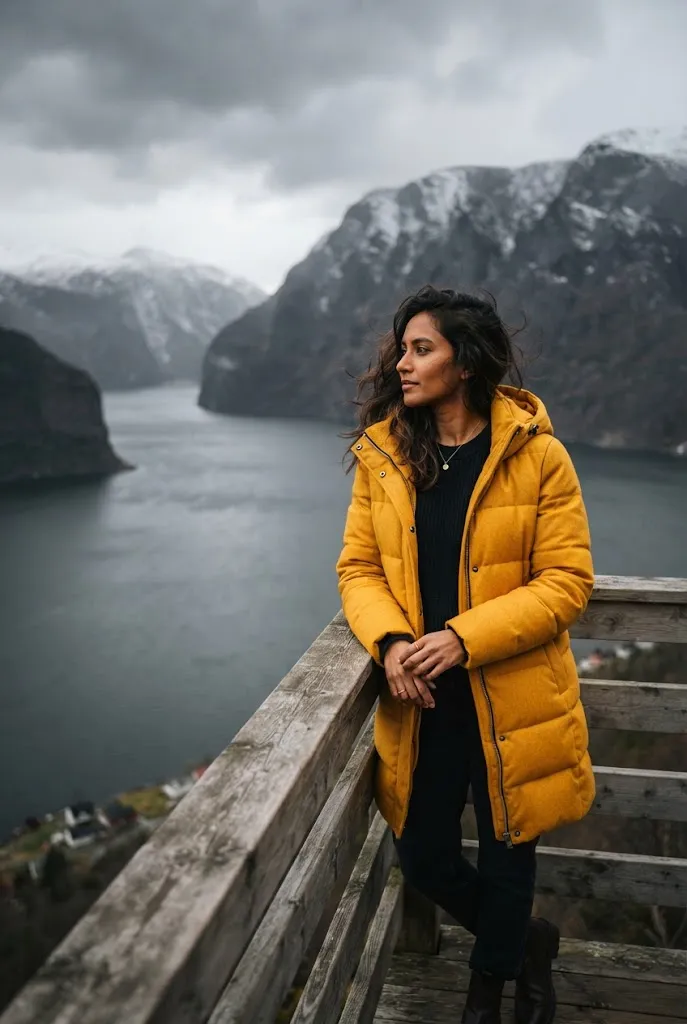
Alaska’s scenery is mostly white, grey, and deep green, which means a bold coat color does more work than a neutral one ever will. Orange, yellow, or teal cuts through every glacier and fjord photo instead of blending into the background.
Neutral coats are practical, but one bold piece changes how every photo from the trip turns out.
One bold coat color is the single easiest way to make your Alaska photos stand out from the scenery.
10. Rain Shell for Glacier Days
Glacier weather changes fast, and a packable rain shell is the piece most people leave home and then regret. It folds down small enough to stuff in a day bag, but it’s the difference between a dry hike and a soggy one when the mist rolls in.
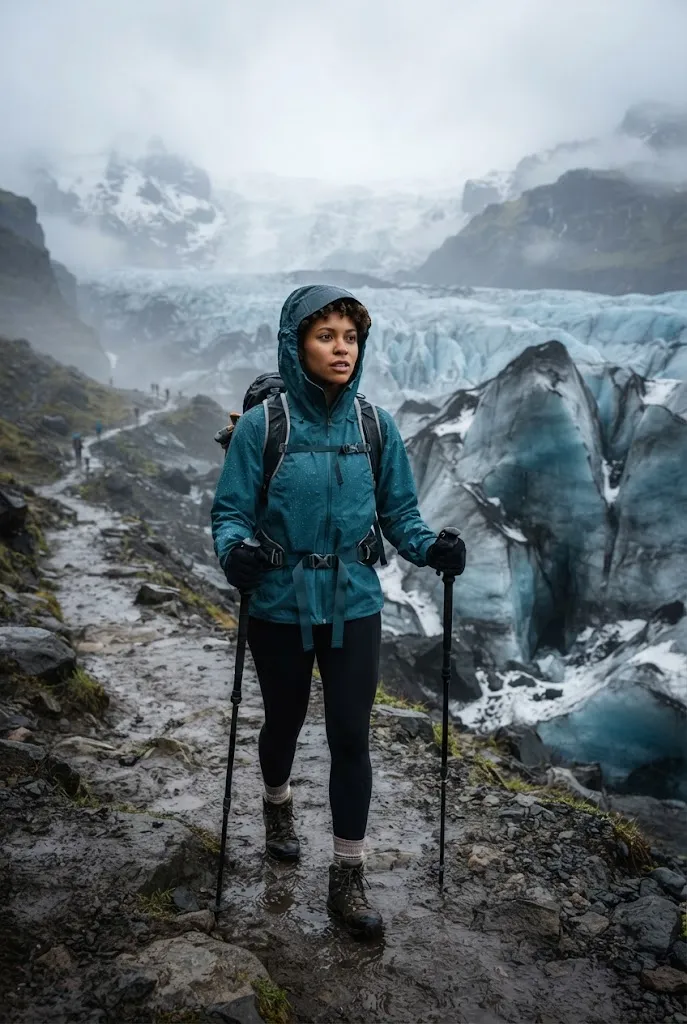
Quick tip: look for sealed seams, not just a water resistant label, since light mist can soak through anything less.
💡 Quick Tip
A shell that packs into its own pocket takes up almost no room and earns its spot on any glacier excursion day.
11. Crossbody Over Backpack
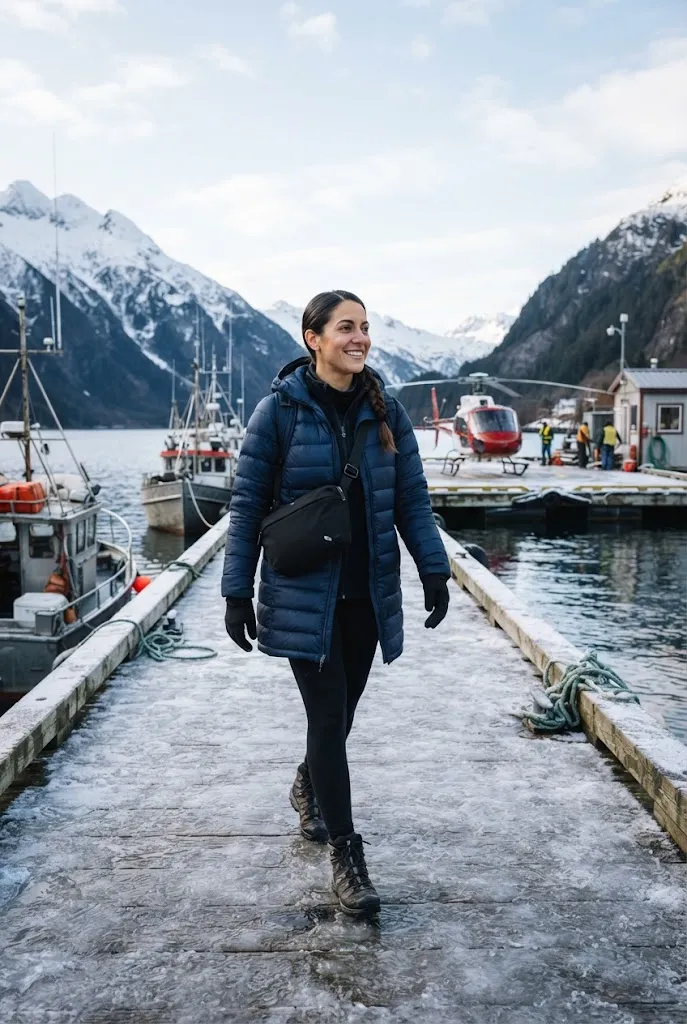
A backpack looks practical until you’re layered in a puffer, gloves, and a scarf and suddenly can’t get the zipper open without taking a layer off. A crossbody bag sits flat against your coat and stays accessible no matter how bundled up you are.
It also keeps your hands free for railings, camera straps, and the occasional handrail on an icy dock.
12. Joggers for Travel Days
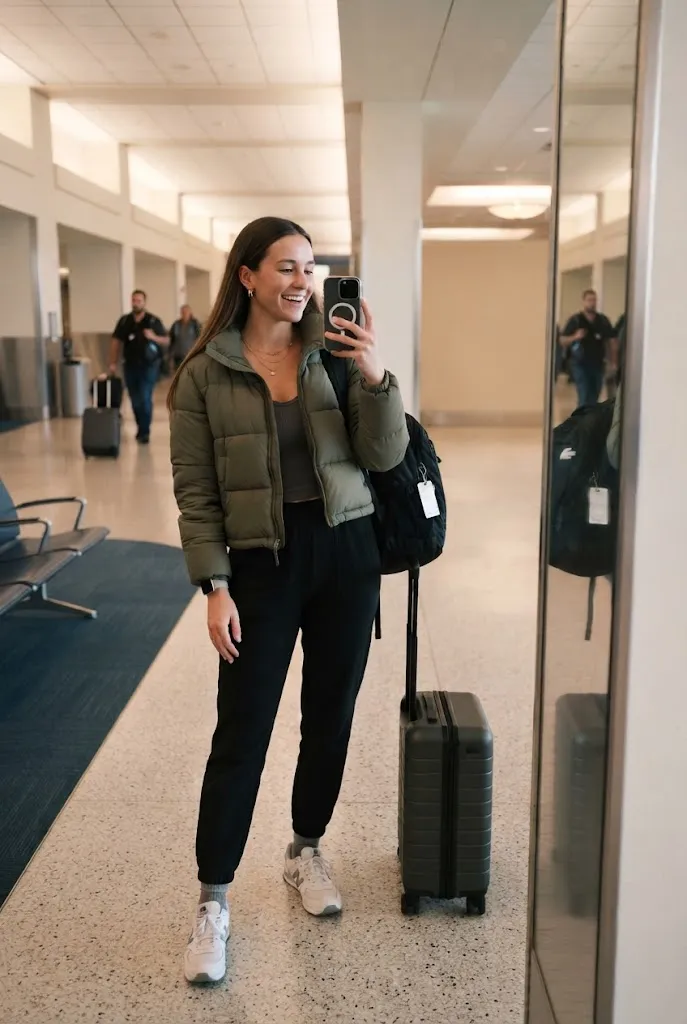
Wear something soft on flight days so the whole capsule doesn’t rely on jeans getting you through a nine hour travel window. Fleece lined joggers do the job without wrinkling in a suitcase or feeling stiff on a long layover.
Here’s the simple test before you pack them.
Can you sit in them for six hours without them digging in at the waist.
Do they still look decent enough to walk straight from the airport to dinner.
Do they pack flat, since bulky sweats eat suitcase space fast.
13. The Hood Rule
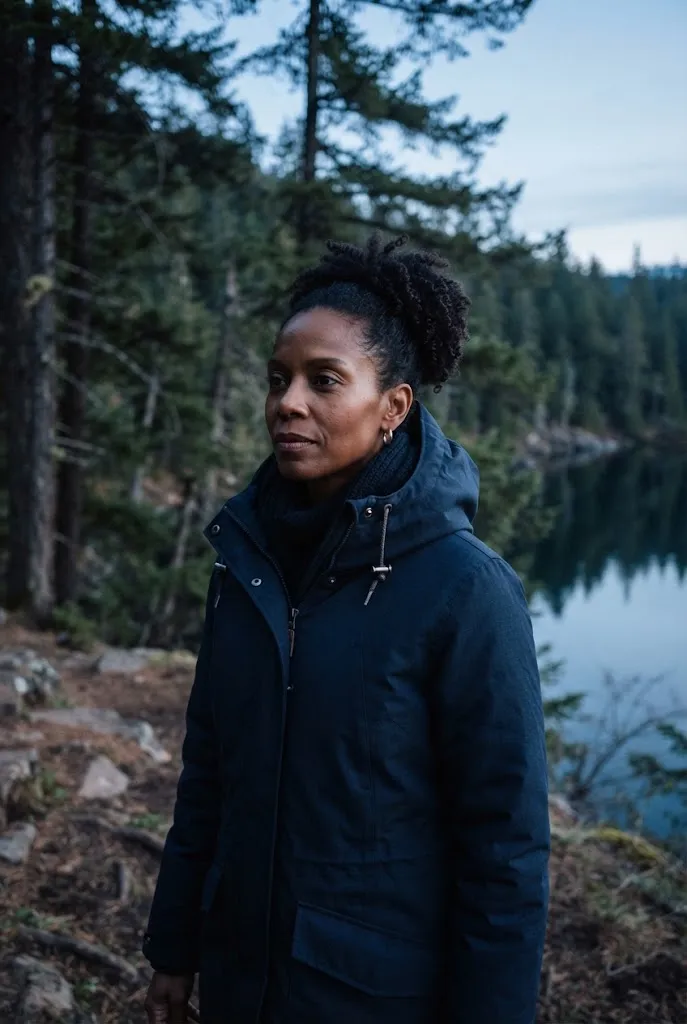
Simple rule: if the coat’s hood doesn’t cinch tight, it’s not doing its job on a windy glacier landing. A loose hood flaps, lets cold air in around your ears, and ends up useless right when you need it most.
Test the drawstring before you buy, not after you’re standing on the ice.
Flaps in wind, lets cold air in around the neck and ears.
Seals around the face, actually blocks wind on a glacier landing.
14. Navy or Black Base Layer
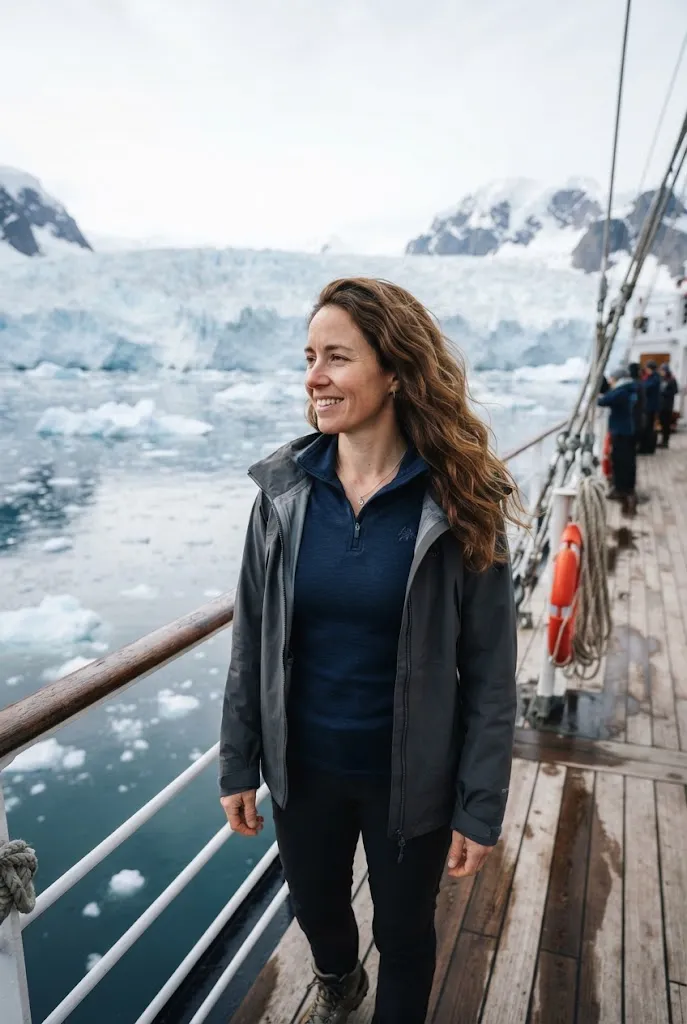
A lot of packing lists push you toward bright colors for everything, but your base layer is the one piece that should stay quiet. Navy or black underneath means it never clashes with whatever coat, scarf, or sweater you pull over it that day.
That’s the whole point of a capsule: fewer decisions, not more.
| Bright Base Layer | Navy or Black |
|---|---|
| Fights with your coat color | Disappears under any layer |
| Limits outfit combos | Pairs with every piece in the capsule |
15. Gloves You Can Shoot Photos In
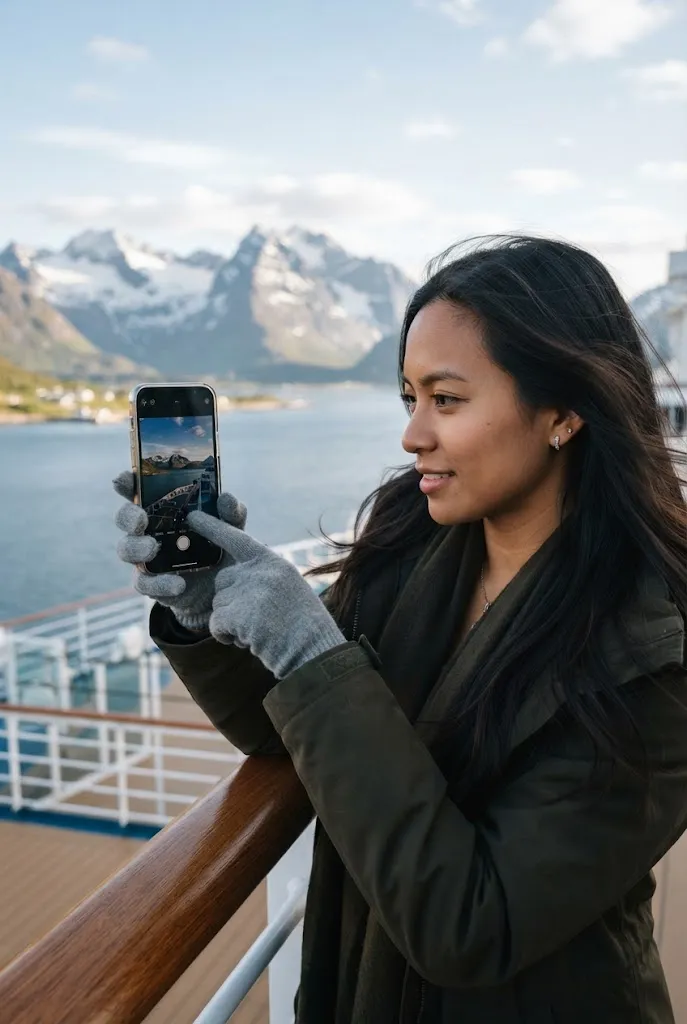
You’ll want your phone out constantly, whether it’s a whale breaching or the light hitting a glacier just right, and thick ski gloves make that nearly impossible. Touchscreen compatible gloves solve it without leaving your hands exposed to the cold for the shot.
Look for a thin liner style, not the bulky waterproof kind, if photos are a priority.
16. Wool Socks Nobody Packs

Most people bring extra sweaters and forget the thing keeping their feet warm for eight hours of walking on a ship deck. Wool socks pull moisture away from your skin, which matters more than thickness once your boots sit in cold, damp air all day.
- Merino wool over cotton, every time
- Pack three pairs minimum, they double as layers under thin socks
- Skip the fuzzy slipper style socks, they hold moisture instead of moving it
Pack these, skip the rest
17. Long Coat vs Cropped Puffer
A long coat blocks wind at your hips and thighs, which matters on an exposed deck. A cropped puffer trades that coverage for freedom of movement on a hike or glacier walk, where you don’t want fabric bunching at your knees.
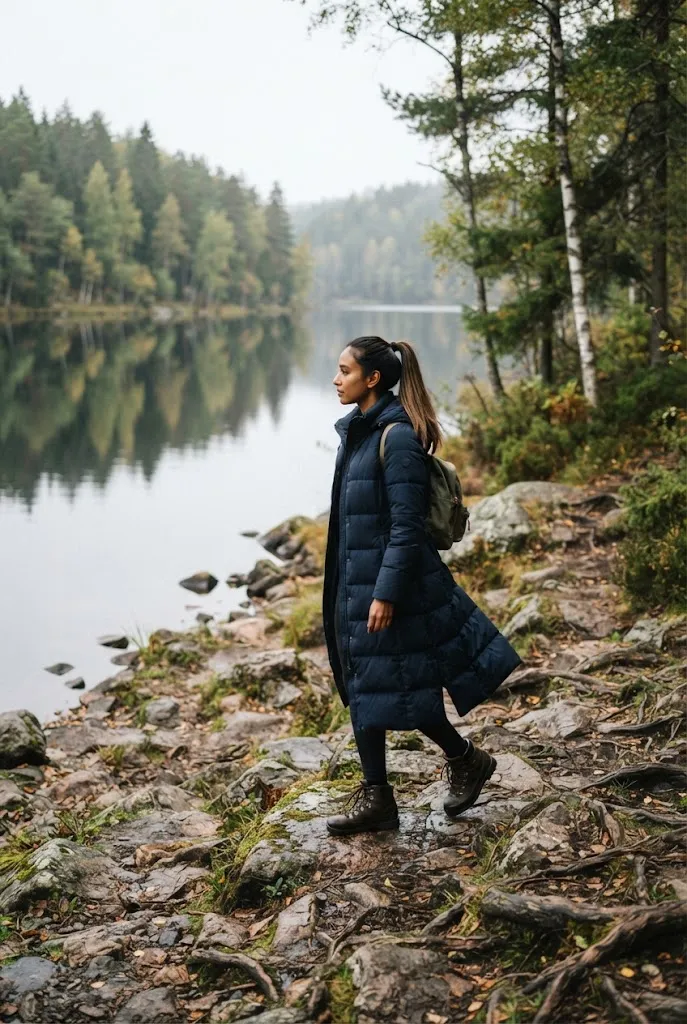
Neither one is wrong. The mistake is packing only one and needing the other halfway through the trip.
Ship deck wind and standing photos.
Dinner nights where you want more polish.
Hiking trails where fabric bunches at the knee.
Getting in and out of a small excursion boat.
18. Sunglasses for Glacier Glare
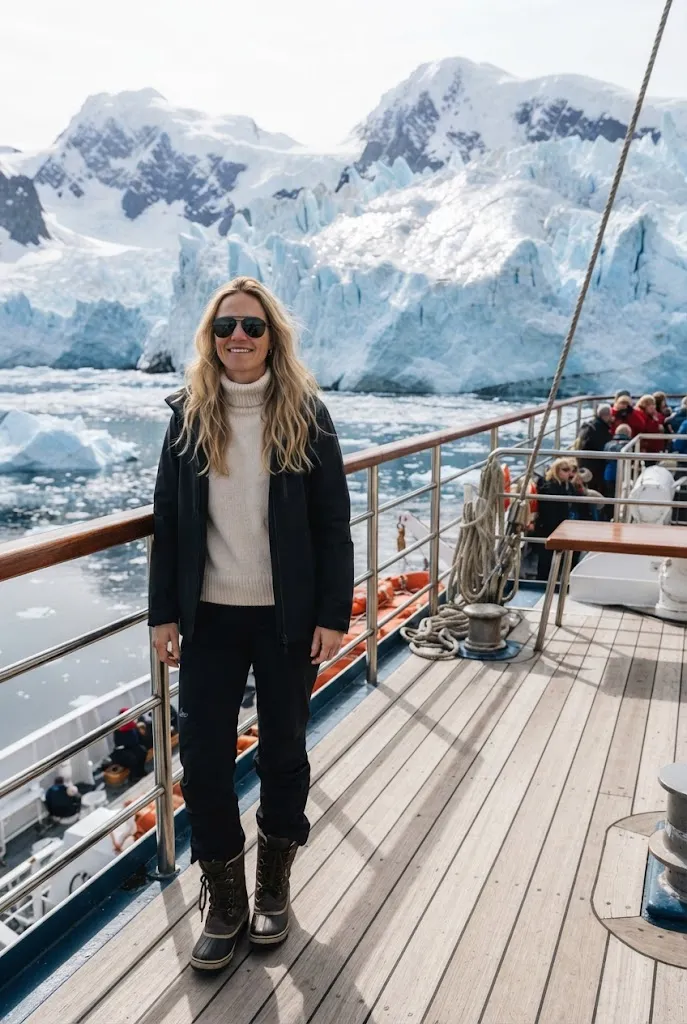
Snow and ice reflect more sun than most people expect, even under a cloudy sky. Regular sunglasses cut brightness but not glare, so your eyes still strain on a long glacier excursion.
Quick tip: polarized lenses are the detail that actually matters here, not the frame style.
💡 Quick Tip
A polarized pair cuts glare off snow and water, which matters far more in Alaska than lens color or frame shape.
19. The One Thing to Never Skip
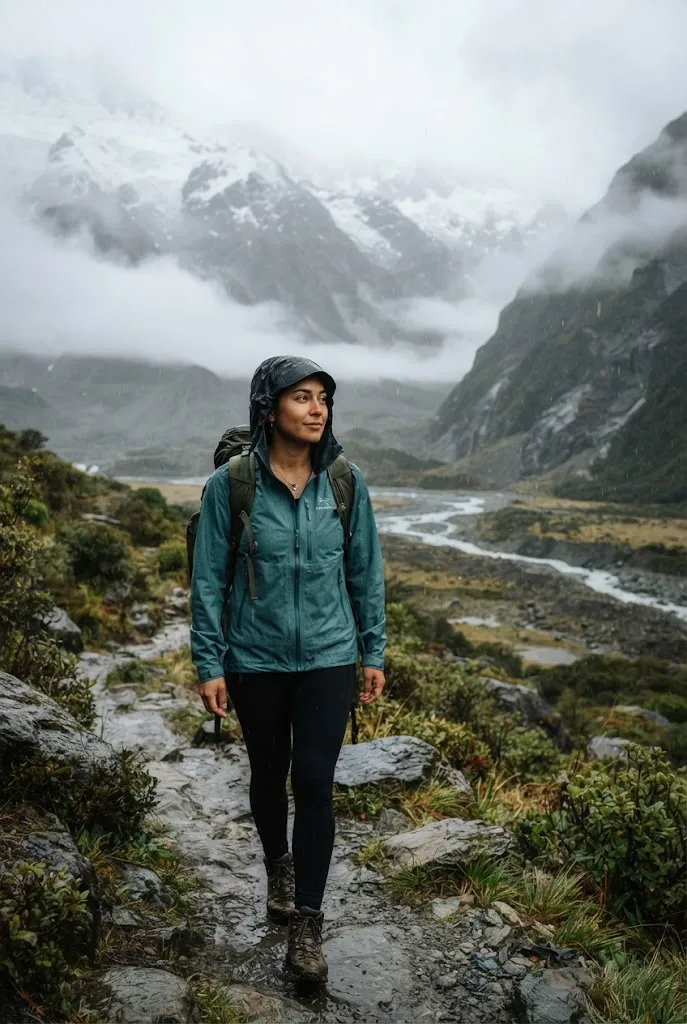
If you cut this capsule down to survive a smaller suitcase, don’t cut the rain shell. Every other piece has a backup or a workaround, but nothing else in this list keeps you dry when the mist rolls in on a glacier day.
A packable rain shell is the one piece in this capsule with no real substitute. Everything else has a workaround.
20. Airport Outfit, Alaska Ready

Wearing your bulkiest coat on the plane saves suitcase space, but it only works if the rest of the outfit doesn’t fight it. Joggers, a plain tee, and slip on shoes get you through security fast and land you already dressed for the cold the moment you step outside.
Neutral wardrobe inspirations can also help you build simple, versatile travel outfits.
- Base layer tee, easy to add a sweater over once you land
- Joggers or leggings, comfortable through a long flight
- Bulkiest coat worn, not packed, to save suitcase room
- Slip on shoes, faster through airport security
Base layer tee, easy to add a sweater over once you land.
Joggers or leggings, comfortable through a long flight.
Bulkiest coat worn on the plane, not packed, to save suitcase room.
Conclusion
A travel capsule wardrobe for Alaska comes down to fewer pieces that actually work together, not more coats stuffed into a suitcase that won’t zip.
Pick your layers with intention, and you’ll be warm on the glacier, comfortable on the deck, and still ready for dinner without changing three times a day.
The pieces on this list aren’t about looking perfect. They’re about not fumbling with your zipper in the wind, or realizing halfway through a hike that your boots were the wrong choice. Pack smart, layer smart, and let the rest of the trip take care of itself.
Recent Posts
-
 13 Errand Running Outfit for women over 40 featuring Easy Sneakers
-
 13 Aesthetic Wedding Guest Outfits for Plus Size Women
-
 12 Masquerade Party Outfit for Ladies That Balance Mystery and Glamour
-
 14 Masquerade Party Outfit Ideas for Couples That Turn Heads
-
 11 Winter Travel Outfit for Women over 30 for Chic Cold-Weather Trips